Key Takeaways
Controller fatigue has been an investigated factor in aviation accidents for decades: Aeroflot 3352 in 1984 was attributed primarily to a sleeping controller; in Comair 5191 in 2006 the controller had met the federal rest minimum and slept two hours yet regulation still overwhelmingly measures hours between duties, not sleep obtained.
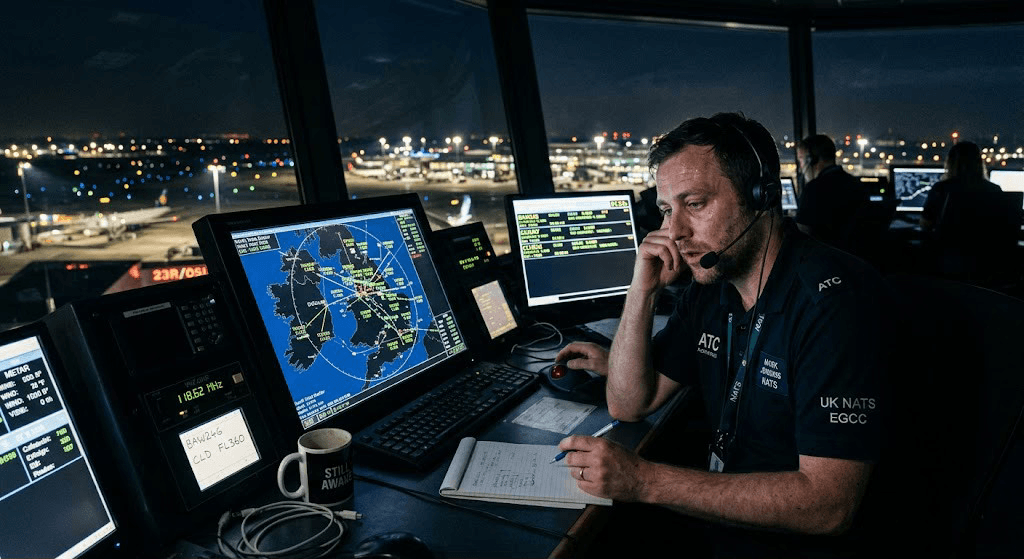
A serving operational air traffic controller told SleepGrade that in their experience there is no correlation between mandated rest gaps and actual sleep, and that monitoring how much controllers sleep remains exceptionally rare across service providers.
On-site rest provision varies enormously between providers, from dedicated bedrooms at some control centers to camp beds and improvised arrangements at others.
Official IFATCA policy (WP156, 2024) specifies strict operational limits, including a 32-hour weekly duty cap and a 2-hour limit on continuous operational duty, while acknowledging that global staffing shortages frequently push controllers past these fatigue safeguards.
The same structural blind spot exists on the pilot side, where regulation defines what a "suitable accommodation" must be but nothing verifies that a specific hotel room delivers one.

Article FAQ
Yes, more than one. The clearest case is Aeroflot 3352 at Omsk in 1984, where the aircraft struck maintenance vehicles on the runway after the controller fell asleep, killing 174 people on board and four on the ground. The record is more nuanced in the 2006 Comair 5191 crash at Lexington: the NTSB concluded the lone controller was most likely fatigued, having slept about two hours, but fatigue was not listed among the probable cause or contributing factors. The investigation did generate formal safety recommendations on controller scheduling and restorative sleep.
International frameworks (such as ICAO Annex 11 and regional regulators like EASA) set fatigue-related requirements for air navigation service providers. IFATCA policy (WP156) recommends strict operational limits — maximum 7.5-hour shifts, a 32-hour weekly duty cap, and a 2-hour limit on continuous radar duty. However, regulatory frameworks focus primarily on duty limits and rest periods — the hours between shifts — rather than verifying the quality of the rest environment or the sleep actually obtained.
Generally, no. Aside from periodic regulator-led sleep surveys, monitoring appears to be rare, and fitness for duty is largely left to the individual controller's own self-assessment.
Controllers mostly rest at home or on site rather than in hotels, so the direct overlap is limited. The structural problem is identical, though: both domains regulate rest time while leaving rest quality unverified. On the pilot side, where crews sleep in contracted hotel rooms, that gap is directly measurable and fixable.
In the early hours of a Wednesday in March 2011, an air traffic controller at Ronald Reagan Washington National Airport fell asleep. Two passenger jets, unable to raise the tower, coordinated their own approaches on a shared advisory frequency and landed at a major capital-city airport with no clearance and nobody watching. He was a twenty-year veteran with a clean record, working his fourth consecutive overnight shift.
What followed mattered more than the incident itself. Within weeks, at least four more sleeping-controller incidents surfaced across the United States — including Boeing Field in Seattle and Reno-Tahoe, where a medical flight carrying at least three people landed unassisted. The head of the FAA's Air Traffic Organization resigned. The Transportation Secretary ordered a second controller onto overnight shifts at more than twenty-five facilities. A single bad night had turned out to be a pattern.
Fifteen years later, according to a serving operational air traffic controller who spoke with Sleep Grade, the thing the industry still doesn't measure is the same thing it wasn't measuring then.
The night the towers went quiet
Controller fatigue is neither new nor theoretical. The starkest case is also among the oldest widely cited: on 11 October 1984, Aeroflot Flight 3352, a Tupolev Tu-154 landing at Omsk, struck maintenance vehicles that were still on the runway. The controller on duty had fallen asleep, and no warning was given. One hundred and seventy-four people on board and four on the ground were killed. It remains the deadliest aviation accident on Russian territory.
In the United States, the reference case is Comair Flight 5191. On 27 August 2006, a regional jet lined up on runway 26 — a 3,500-foot general aviation strip — instead of runway 22, the 7,000-foot air carrier runway it had been cleared for, and crashed on takeoff at Blue Grass Airport, Lexington. Forty-nine of the fifty people aboard were killed.
The sole controller on duty had worked a shift ending at 14:30 the previous afternoon and returned nine hours later for a shift beginning at 23:30. Nine hours off against a federal minimum of eight — in the NTSB investigator's own characterization, just enough to meet the rule. He told investigators he had obtained approximately two hours of sleep in that window. He was working alone, contrary to FAA policy, and had turned away to administrative work after clearing the flight for takeoff.
Here the record deserves to be stated precisely, because the precision is the point. The NTSB's probable cause was the flight crew's failure to use available cues to identify their position and to cross-check that they were on the correct runway; the listed contributing factors were the crew's non-pertinent conversation during taxi and the FAA's failure to require specific clearances for runway crossings. Controller fatigue appears in neither. The investigation concluded the controller was most likely experiencing fatigue at the time but also that his routine practices did not consistently include monitoring takeoffs, so a rested controller might not have been watching either.
What the accident did produce was a set of safety recommendations, A-07-30 through A-07-32, urging the FAA and the controllers' union to revise scheduling practices so that rest periods were long enough for controllers to obtain sufficient restorative sleep.
That sequence is worth sitting with. The rest requirement was met. The sleep was not obtained. And the regulator's response was not to dispute the finding, but to recommend that the rule be rewritten to aim at the thing it had failed to secure.
The warnings were on record long before 2011. In 2007, NTSB chairman Mark Rosenker wrote to the FAA citing "clear and compelling evidence" that controllers were sometimes operating fatigued because of their work schedules and poor use of rest periods, referencing four near-misses. And a 2011 FAA-commissioned study — withheld from public release for nearly four years, and obtained in draft by the Associated Press — found that more than six in ten controllers had fallen asleep or experienced a lapse of attention while driving to or from midnight shifts in the previous year.
What the rules actually measure
Ask what protects a controller from fatigue and the answer is a duty limit. Hours worked. Minimum gap between shifts. Globally, regulators establish fatigue-related requirements that providers must meet, and ICAO Annex 11 provides the broader international framework. These measures are principally concerned with time.
Our source, a serving operational air traffic controller speaking on condition of anonymity, put the limitation of that approach in one sentence.
Asked how well time between duties correlates with whether a controller actually gets restorative sleep:
“In my experience there is no correlation.”
The controller went further:
“No ANSP I have come across so far monitored how much sleep ATCOs get, except when there has been sleep surveys studies by regulators such as EASA.”
Adding the careful qualifier:
“That is not to say there aren't some out there that do; it's just so far I have not discovered them.”
What exists instead is self-assessment:
“There is a reliance upon the ATCO to self-assess their fitness to operate. While many do provide guidance material, the decision lies with the individual.”
This is the same architecture the US Federal Aviation Regulations use on the pilot side. Under 14 CFR Part 117, a flight crew member must receive a rest period of at least ten consecutive hours providing a minimum of eight uninterrupted hours of sleep opportunity and if the crew member determines the rest period will not provide it, they must notify the carrier and cannot report for duty. The regulation is unusually honest in what it implies: it already accepts that rest quality is assessable and consequential.
It simply assigns the entire assessment to the person who is, by definition, the least well-rested party in the transaction, and provides no independent means of verifying the environment they were given.
A bedroom, or a camp bed
Where controllers do rest on site, provision varies dramatically. Asked what that variation looks like in practice, our source described the range directly:
“You can have some ACCs with dedicated bedrooms for operational ATCOs while others will have less organized sleeping arrangements — e.g. couches, camp beds, etc.”
Geography and predominant traffic flows dictate when aircraft arrive, shaping shift schedules and the frequency of night operations. In some facilities, night shifts are frequent; in others, rare.
Cultural attitudes are also shifting over time:
“Historically I think it was a cultural issue that ANSP management didn't want to acknowledge ATCOs might sleep on duty. I think it has shifted somewhat as the scientific evidence has become better known.”
Jurisdiction also plays a key role. While certain regional bodies establish explicit requirements covering rest facilities, those standards do not extend globally. Beyond those boundaries, whether a controller rests in a bedroom or on a couch remains a function of local facility design, budgets, or operational policy.
Former NTSB board member John Goglia, speaking after the 2011 Reagan National incident, explained why low-traffic shifts carry unique risks:
“It's worse when nothing is going on. When it's busy, you have to stay engaged. When it's quiet, all they have to be is a little bit tired and they'll fall asleep.”
Why it persists: the staffing math
The most useful perspective the controller offered was not about facilities at all. It was about why an industry that understands sleep science still experiences fatigue risks — and the explanation is structural:
“The willful ignorance, I believe, is due to operational needs and many in management don't know the science," the controller noted. "In fairness to them, I'm only learning the science myself in recent years.”
Senior managers appointed from outside air traffic control may not fully grasp the human factors consequences of operational decisions.
This dynamic is documented at the policy level.
In Working Paper 156 (2024), presented at the 63rd Annual Conference of the International Federation of Air Traffic Controllers' Associations (IFATCA), the federation formally reviewed its Work and Rest Scheme policies (WC10.3.2). The paper highlights that air traffic control globally is struggling with staffing shortages that push personnel beyond recommended limits, leading to pronounced symptoms of fatigue.
When air navigation service providers face staffing shortfalls, meeting traffic demand often relies on longer duty hours, mandatory overtime, or restricted leave, leaving controllers to bear the physiological burden.
The controller summarized the challenge directly:
“There's a belief that regulatory compliance ensures safety, whereas I can see that safety has to be continuously fought for.”
The part that isn't fatigue
Beyond acute in-shift sleepiness, human factors research highlights a distinct operational challenge: cumulative energy depletion. Controllers who do not subjectively assess themselves as fatigued while on duty frequently report feeling physically and emotionally depleted post-duty, across their shift cycle, and into their rest days.
That distinction matters. Acute sleepiness during a shift makes headlines and is what regulatory duty caps are designed to prevent. Cumulative depletion across a roster is harder to observe, harder to self-report, and invisible to any system that measures only the off-duty gap between shifts.
When asked what single change would have the greatest positive impact, the controller's answer pointed directly to scheduling architecture: "Science-based rosters."
IFATCA's Work and Rest Scheme policy explicitly reinforces this principle: operational rosters should follow simple, predictable patterns with max 7.5-hour shifts, an average weekly duty and break limit not exceeding 32 hours, a maximum of 2 hours of continuous operational duty (reduced to 90 minutes for radar displays), and a minimum 11-hour consecutive daily rest.
While shift workers across various industries sometimes negotiate shift patterns to maximize consecutive blocks of rest days, anchoring rosters strictly in scientific evidence remains the most effective way to protect long-term controller health, alertness, and operational safety.
Where this connects to the room
We should be straightforward about the limits of the analogy. Air traffic controllers generally do not sleep in hotels. They rest at home between shifts, or on site during them. Sleep Grade scores hotel rooms at the moment; there is no direct product application to a control centre's rest facilities in present, and we are not going to pretend otherwise.
What transfers is the logic.
Both domains have decided that rest is safety-critical. Both have written rules that quantify time. Neither, in general, verifies the environment. And in both, the person expected to notice the shortfall is the person least equipped to notice anything.
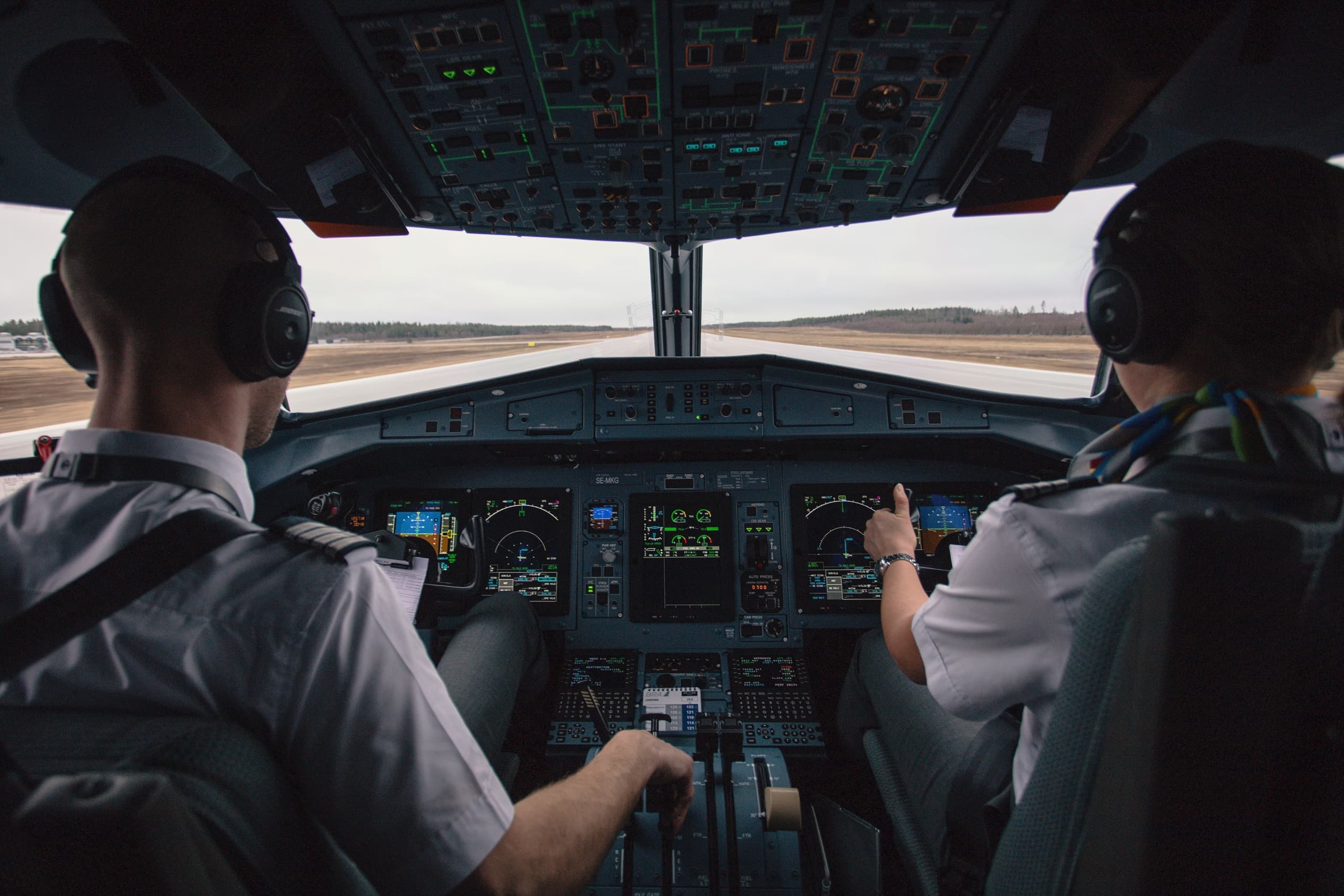
The difference is that on the pilot side, that gap has an address. When a flight crew lands at the end of a duty period, they sleep in a hotel room that a carrier contracted, in a building the carrier selected.
The regulation even describes what that room is supposed to be: under Part 117, a suitable accommodation is defined as a temperature-controlled facility with sound mitigation and the ability to control light. Those are not aspirational adjectives. They are light, sound and temperature, measurable environmental levers, and they directly govern recovery.
A US Department of Transportation Inspector General audit found precisely what happens when nobody measures them: a crew rest facility that satisfied the required hours and still failed to deliver sleep, because of noise, light and interruptions.
Hours met. Rest not delivered. Compliant, and useless.
The crews themselves already know which variable matters most. In a 2023 peer-reviewed survey of 270 international long-haul pilots, transit accommodation and rest conditions ranked as the single most significant fatigue factor among all working conditions studied ahead of the cockpit environment itself.
How Sleep Grade helps
That is what Sleep Grade measures: whether a specific room, in a specific hotel, on a specific contract, actually delivers the darkness, quiet and thermal control and other parameters the regulation and sleep science already say it should.
Not whether the hours were met. Whether sleep was possible in most optimal way.
It does not solve air traffic control fatigue. Nothing in a hotel scoring system reaches a provider's rest room, its rosters, or its staffing shortfall.
But the two problems are the same problem wearing different uniforms and one of them is already, today, entirely measurable.
The controller was awake. The rule was satisfied.
Neither of those facts tells you whether anyone slept.
Acknowledgment
Interview conducted by SleepGrade, August 2026, with a serving air traffic controller at a European air navigation service provider. Quoted anonymously at the interviewee's request; transcript on file.
References
- National Transportation Safety Board, Aircraft Accident Report: Attempted Takeoff From Wrong Runway, Comair Flight 5191, Bombardier CL-600-2B19, N431CA, Lexington, Kentucky, 27 August 2006 (NTSB/AAR-07/05).
- National Transportation Safety Board, Safety Recommendations A-07-30 through A-07-32 (controller work scheduling and restorative sleep), 2007.
- Aeroflot Flight 3352, Omsk, 11 October 1984 — Soviet accident investigation record; contemporary and retrospective aviation-safety reporting.
- Marcus, J.H. & Rosekind, M.R. (2017), "Fatigue in transportation: NTSB investigations and safety recommendations," Injury Prevention, 23(4), 232–238.
- U.S. DOT Office of Inspector General (2011), Report AV-2011-176, "FAA and Industry Are Taking Action To Address Pilot Fatigue, But More Information On Pilot Commuting Is Needed".
- 14 CFR Part 117 — Flight and Duty Limitations and Rest Requirements: Flightcrew Members, §§ 117.3, 117.25.
- Sun, J.-Y. & Sun, R.-S. (2023), "Pilot fatigue survey: A study of the mutual influence among fatigue factors in the 'work' dimension," Frontiers in Public Health, 11:1014503.
- ICAO Annex 11 (Air Traffic Services); EASA fatigue and rest-facility requirements for air navigation service providers.
- IFATCA working paper on controller staffing and fatigue breaks, referenced by the interviewee.
- CAA International, "Research Study on Air Traffic Controller Fatigue."
- Associated Press reporting on the withheld 2011 FAA controller fatigue study (published 2015); contemporary reporting on the March–April 2011 US sleeping-controller incidents and subsequent FAA overnight staffing changes.

Written by Sleep Grade Research
Associated with Bendegul (Benny) Okumus Ph.D.
College of Hospitality, Retail and Sport Management — University of South Carolina
LinkedIn